
Proposal to Extend Time for Updated ITR
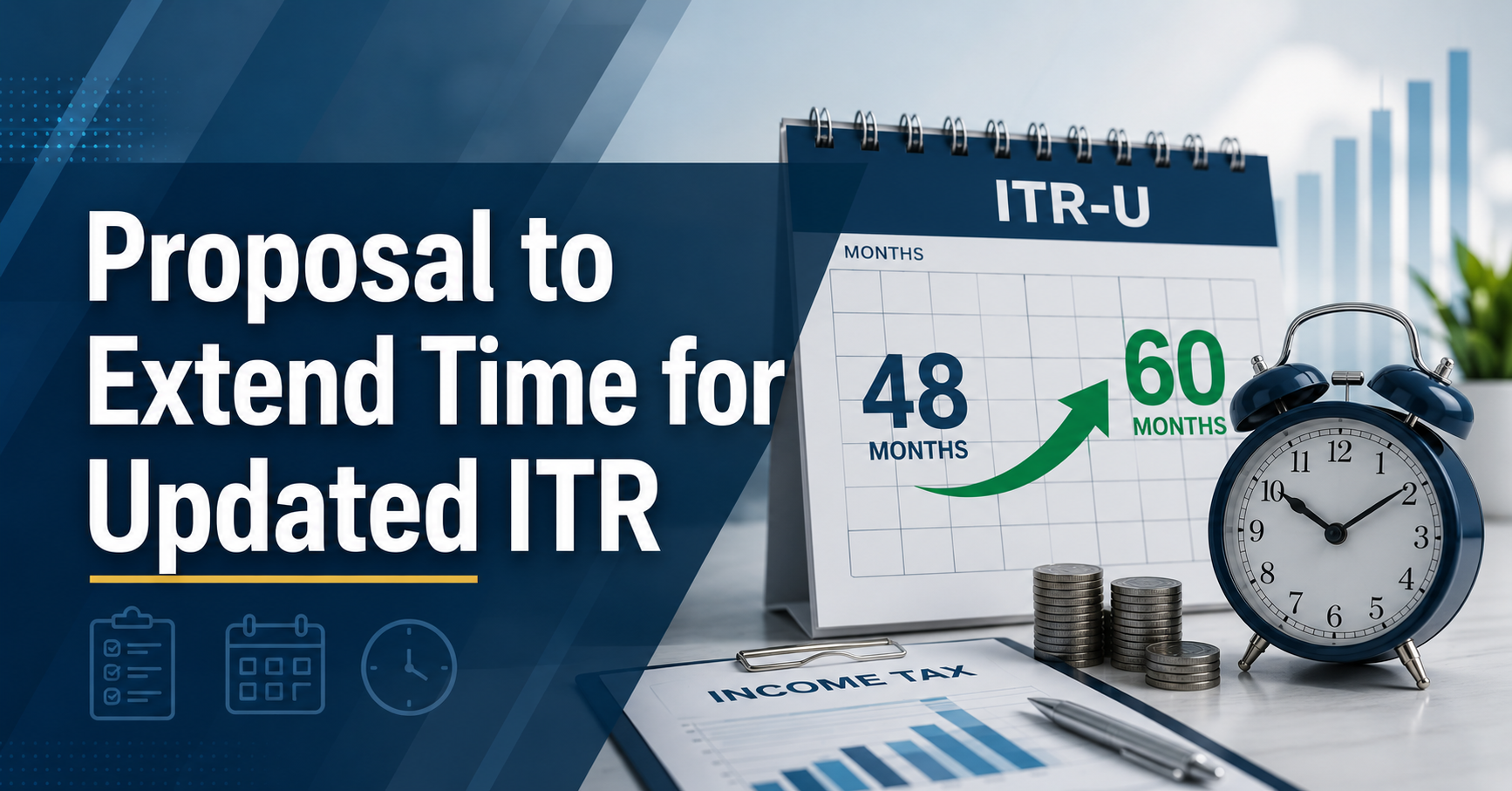
Proposal to Extend Time for Updated ITR: 48 Months to 60 Months
The Government has proposed further widening the Updated Return mechanism, giving taxpayers additional time to voluntarily correct omissions or disclose income that was not reported earlier. The proposal seeks to extend the maximum period for filing an Updated Return from 48 months to 60 months, subject to the applicable additional tax and other conditions.
What Is an Updated Return?
An Updated Return is a voluntary compliance mechanism that allows taxpayers to correct omissions or disclose additional income after the normal return-filing and revision windows have expired.
The Updated Return mechanism was originally introduced under Section 139(8A) of the Income-tax Act, 1961. The Finance Act, 2025 had already extended the filing window from 24 months to 48 months from the end of the relevant assessment year.
Proposed Extension to 60 Months
The 2026 tax proposals seek to provide a further opportunity by extending the maximum period for filing an Updated Return to 60 months.
Key highlights include:
- Existing maximum window: 48 months.
- Proposed maximum window: 60 months.
- The additional five-month? No — the proposal effectively provides an additional 12 months beyond the existing four-year window.
- The facility continues to be intended for voluntary correction of omissions and disclosure of additional income.
- Applicable additional tax and interest requirements continue to be relevant.
Professional analysis of the 2026 tax proposals describes the updated-return framework as permitting filing within 60 months from the end of the relevant tax year, subject to the prescribed additional payment.
Why Is This Important for Taxpayers?
The extended window can provide additional time to taxpayers who subsequently discover:
- Income that was omitted from an earlier return;
- Incorrect reporting of income;
- Income that was not disclosed in the original return; or
- Other eligible discrepancies requiring voluntary correction.
This can be particularly relevant for taxpayers dealing with multiple sources of income, investments, business transactions, foreign income or other complex financial information.
Additional Tax Still Applies
The extended time period does not mean that an Updated Return can be filed without additional tax consequences.
Updated Returns are subject to prescribed additional tax and interest requirements. The longer a taxpayer waits within the permitted window, the higher the applicable additional tax burden may be.
Therefore, taxpayers should not treat the proposed 60-month period as a reason to delay compliance. Early identification and correction of omissions can generally be more cost-effective.
Practical Steps for Taxpayers
Taxpayers considering an Updated Return should:
1. Review earlier income-tax returns and computation statements.
2. Reconcile AIS, TIS, Form 26AS and bank records.
3. Identify any omitted or incorrectly reported income.
4. Determine the additional tax and interest payable.
5. Check whether the taxpayer is legally eligible to file an Updated Return.
6. Complete the disclosure accurately before filing.
Key Takeaway
The proposed extension of the Updated Return window from 48 months to 60 months would provide taxpayers with an additional opportunity to voluntarily correct eligible omissions and disclose previously unreported income.
However, the facility comes with additional tax costs and statutory conditions. Taxpayers should review their earlier returns carefully rather than waiting until the extended deadline.
As the proposal forms part of the 2026 tax-law changes, taxpayers should also verify the final enacted provisions and their effective date before relying on the extended 60-month window. The Taxation and Other Laws (Amendment) Bill, 2026 was introduced in Parliament on 4 August 2026, and the subsequent legislative position should be considered when determining the applicable law.
Have Questions? We're Here to Help
Get expert advice from Srikanth Sagar & Associates. Reach out to discuss your requirements.