
Income Tax Recovery: Arrest & Detention Provisions Removed
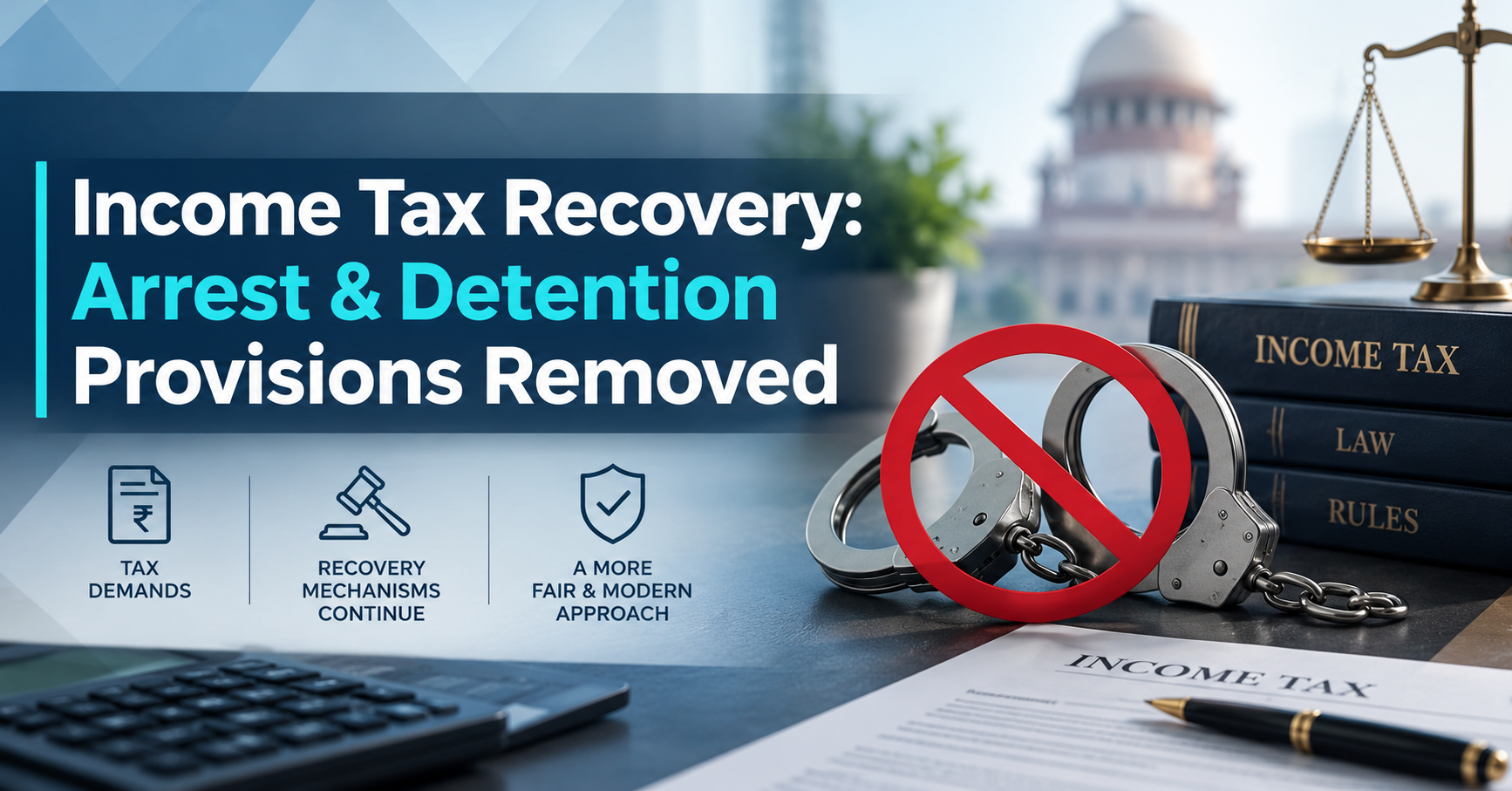
Income Tax Recovery: Arrest and Detention Provisions Removed
The CBDT has amended the Income-tax Rules, 2026 to remove provisions relating to arrest and detention in prison as a mode of recovery of tax arrears. The change has been made through Notification No. 120/2026 dated 17 September 2026.
CBDT Notification No. 120/2026
The Central Board of Direct Taxes (CBDT) has notified the Income-tax (Fourth Amendment) Rules, 2026 vide Notification No. 120/2026, G.S.R. 822(E), dated 17 September 2026.
The amendment is issued under the Income-tax Act, 2025 and makes several changes to the Income-tax Rules, 2026, including important amendments to Rule 225 relating to recovery of tax arrears.
Arrest and Detention Provisions Removed
Rule 225 deals with the procedure for recovery of tax arrears. The amendment specifically removes provisions relating to arrest and detention of a tax defaulter.
The key changes include:
- Clause (c) of Rule 225(4) has been omitted.
- Sub-rules (75) to (83) and sub-rule (91), which contained provisions connected with arrest, detention and civil imprisonment, have been omitted.
- The reference to arrest in Rule 225(19) has been removed.
- The words “except arrest and detention” have also been removed from Rule 225(87).
These amendments effectively remove arrest and detention in prison from the recovery mechanisms prescribed under Rule 225.
Other Tax Recovery Measures Continue
The amendment does not mean that outstanding tax dues are no longer recoverable.
Other prescribed recovery mechanisms continue to apply, including measures relating to the taxpayer’s property. Depending on the circumstances, recovery can continue through mechanisms such as:
- Attachment and sale of movable property
- Attachment and sale of immovable property
- Other prescribed modes of recovery under the Income-tax Rules
Therefore, taxpayers with outstanding tax demands should not interpret the amendment as a waiver or cancellation of tax arrears. The change relates specifically to the removal of arrest and detention provisions from Rule 225.
Effective Date
An important aspect of the notification is its retrospective commencement.
The Income-tax (Fourth Amendment) Rules, 2026 provide that Rules 2 to 4 of the amendment shall be deemed to have come into force from 1 April 2026.
Since the amendments to Rule 225 are covered under Rule 4 of the notification, the changes relating to arrest and detention are therefore deemed effective from 1 April 2026. The remaining amendments covered by Rules 5 to 8 came into force on publication in the Official Gazette on 17 September 2026.
What Taxpayers Should Know
Taxpayers facing outstanding income-tax demands should keep the following points in mind:
- Removal of arrest and detention does not extinguish existing tax liabilities.
- Recovery proceedings relating to property and other prescribed mechanisms continue.
- Outstanding demands should be reviewed and reconciled with the taxpayer’s records.
- Where a demand is disputed, appropriate appeal, rectification or stay remedies should be considered within the applicable timelines.
- Taxpayers already facing recovery proceedings should obtain professional advice based on the specific facts of their case.
Conclusion
The amendment through CBDT Notification No. 120/2026 represents a significant change to the recovery framework under Rule 225 of the Income-tax Rules, 2026 by removing arrest and detention in prison as recovery measures.
However, taxpayers should continue to address outstanding tax demands promptly, as other statutory recovery mechanisms remain available to the tax authorities.
For expert guidance on this topic, contact us @ www.srikanthsagarassociates.com
Have Questions? We're Here to Help
Get expert advice from Srikanth Sagar & Associates. Reach out to discuss your requirements.